Wednesday, 29 May 2013
What is Interfaith Dialogue?
This video is targeted at the Year 8 boys who are about to embark on a 'Places of Worship' outing to The West London Synagogue, The Regent's Park Mosque and Islamic Culture Centre, and Westminster Catholic Cathedral.

Tuesday, 21 May 2013
Tuesday, 14 May 2013
GCSE Philosophy Revision by Video:
This is how to revise through kicking back and watching awesome video clips:
If we look at the following clip from iRobot, we can find out about the B602 topics: Religion & Science and Good & Evil.
By analysing the role of Artificial Intelligence we can seek to understand the concept of creation. As scence is progressing one needs to understand how religion can communicate effectively with science (dialogue), also the fact of whether this needs to happen. The moral dilema within this film shows how the constant progression of science involves constant ethical and spiritual enquiry.
Key terms: dialogue, origins of the world, origins of humanity, place of humanity in relation to animals and AI, stewardship, dominion, environmental issues.
The next video clip from The Day After Tomorrow explores the concepts of dominion and stewardship and whether or not we, humanity, has the responsibility to look after the earth. The communuication between religion and science becomes distinct when you then ask the question, is it our reposibility to look after God's creation? We can also look at the differences between natural evil and moral evil.
Inception makes us think of the very nature of reality. We start to question whether what is around us is created or an accident (Paley's teleological argument). Russell's brute fact suggests that if we are empiricists then we should not seek to question creation and its cause. We should trust in what is around us, our senses. Miracles would therefore create a conflict here. If we were to trust in a miracle, for examples Lourdes where St Bernadette built a chapel to honour the Virgin Mary over the spring in which Mary had bestowed healing qualities.
This clip from Inception also evokes thought on death. The "wake me up" scene tackles with the concept of death in one dimension but not in the alternate dimension. This could be similar to the Christian concept of death, which develops from Plato's dualism, that the body is distinct from the soul. Ensoulment is our key term here. When a Christian dies, they believe their soul is judged (particular judgement) and then proceeds to Heaven or Hell (judgement takes place in purgatory for Roman Catholics). The body then joins the soul in Heaven at general judgement.
The Matrix, a classic weapon Religion & Theology teacher's arsenal. This clip analyses the dichotomy between having knowledge of God and understanding Him. A Christian may well feel they have a knowledge of God: he is omnipotent, omniscient, immutable, timeless, creator and benevolent.
However one cannot seek to understand God, or his actions. Christianity teaches, in a similar vein to the other Abrahamic religions (Judaism and Islam) that one cannot undermine God by asserting to know his motives. If something is attributed to God then we, as his creation, cannot seek to justify his actions. This is in essence the Story of Job. God can act as God needs to act, and that does not have to be justified to us. The problem of evil therefore, with original sin as a justification for suffering in the world, needs to be referenced along side this. Can a benevolent God let evil happen?
Do comment or Tweet with any questions or queries.
Monday, 29 April 2013
Worship in scale:

Houston, Texas, USA boasts claim to one of the largest "megachurches" in the world. The Lakewood Church has a capacity of over 17,000 seated (up to 20,000 in total).
Is this the way Christianity needs to go to keep up-to-date with the C21st?
Should religion be practiced in this way, does it lose a certain personal/private aspect of worship?
The Church broadcasts its services both live and via a video blog channel:
If charesmatic worship and congregational energy is your thing, then this seems to be a great environment for likeminded Christians. However this does make a change from dwindling parish attendance records in the Anglican churches spattered across the UK.

The Lakewood church is non-denominational. This not only means that their is an 'open-door' policy to worship, but that the community spirit seems to be amalgomated and positive. Could the UK benefit from a shift in worship practices like this? What do you think?
Tuesday, 16 April 2013
What is Christianity?
In order to understand Christianity we must first explore its history as the doctrinal development of the religion has influenced greatly the way in which it is practiced globally.

The fundamental core doctrinal beliefs of Christianity are that it is a monotheistic religion; it has a Trinitarian concept of God, this is that God comprises God the father, God the Son and God the Holy Spirit. Whereby there are three distinct yet unified entities within the one united God. Christians believe that God the son: Jesus Christ was sent by Him to be the Messiah which fulfils the prophecies of the Jewish Pentateuch and the Old Testament. Jesus is believed to be both son of God and son of Man, therefore transcending the boundaries between God and humanity, which is why, Christians believe, He was able to sacrifice himself for the salvation of mankind.
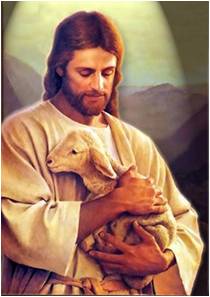
The Christian Holy text is the Bible. This comprises the Jewish Pentateuch (the first 5 books in the OT) more OT writings and prophecies, and the New Testament canon. This is made up of the four Gospels, some additional texts and the Pauline scriptures. The canon was decided upon over a series of Councils in the first few centuries CE.
The life and teaching of Jesus Christ led those who believed that He was the son of God to form themselves into a spiritual and political movement where they were known as Christians. Greco-Roman society in C1-2 CE was dangerous to be a Christian. At the time Christians lived in the Roman Empire and the Romans believed had an eclectic polytheistic and pagan spiritual mix, where Caesar was God. The Romans persecuted Christians who refused to accept that.

This all changed in 313CE when the Roman Emperor Constantine converted to Christianity. Constantine declared Christianity to be the official religion of the Roman Empire and the influence of the Christian religion increased rapidly. Predominately the two most important historical figures of early Christianity were Peter and Paul. Paul spread the Gospel into the wider Middle-east and to Greece; Peter based his teachings of Christ in Rome. By C10th CE there were two main centres of power; The Western Catholic Church which was based with the Pope in Rome, Italy; and the Eastern Orthodox Church based with the Patriarch of the Church of Constantinople, Turkey.
The reformation C16thsaw the doctrinal discrepancies of the accessibility of God’s work in the Bible; the transubstantiation in the Eucharist; the worship of saints; ‘faith through works’ and Luther’s sola scriptura create a schism between the Catholic and the ‘now termed’ Protestant factions of Christianity. Another schism took place before the reformation in 1054CE and centred on the core concepts of Orthodox and Catholic Christianity. The Eastern Orthodox Church has remained relatively unchanged to this day since the ‘Great Schism’ of 1054CE occurred.

When one analyses the doctrine of Christianity and its history, one can see that Christianity is not just a belief system centred on the teachings of one man. It is about an identity and a faith structure which is fundamental to Western history and the political development of the Globe over the last two thousand years.
Monday, 15 April 2013
Immortality of the soul
One of the main themes in the Phaedo is the idea that the soul is immortal. Socrates offers four arguments for the soul's immortality:
- The Opposites Argument explains that as the Forms are eternal and unchanging, and as the soul always brings life, then it must not die, and is necessarily "imperishable". As the body is mortal and is subject to physical death, the soul must be its indestructible opposite. Plato then suggests the analogy of fire and cold. If the form of cold is imperishable, and fire, its opposite, was within close proximity, it would have to withdraw intact as does the soul during death. This could be likened to the idea of the opposite charges of magnets.
- The Theory of Recollection explains that we possess some non-empirical knowledge (e.g. The Form of Equality) at birth, implying the soul existed before birth to carry that knowledge. Another account of the theory is found in Plato's Meno, although in that case Socrates implies anamnesis (previous knowledge of everything) whereas he is not so bold in Phaedo.
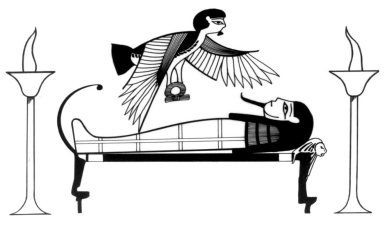
- The Affinity Argument explains that invisible, immortal, and incorporeal things are different from visible, mortal, and corporeal things. Our soul is of the former, while our body is of the latter, so when our bodies die and decay, our soul will continue to live.
- The Argument from Form of Life explains that the Forms, incorporeal and static entities, are the cause of all things in the world, and all things participate in Forms. For example, beautiful things participate in the Form of Beauty; the number four participates in the Form of the Even, etc. The soul, by its very nature, participates in the Form of Life, which would mean the soul could never die.
Monday, 18 March 2013
Witness: Pope Francis I
Father Nicholas King sj, a friend of mine whom acted as my guide and source of knowledge in a tour of the Middle East with the University of Oxford in 2010. Nick has written a fantastic article on the election of the new Pope. Nick is a Jesuit priest and an authority on both the Catholic Church and New Testament theology. He wrote the following article for a South African newspaper and has kindly allowed Dulwich College to share it with its students:
Pope Francis I
It has been an extraordinary few weeks in the life of the Catholic Church, from the almost-unheard-of resignation of a Bishop of Rome to the totally-unheard-of election, accomplished with quite remarkable rapidity, of a Jesuit as his successor. It may be helpful to readers to explain that the Jesuits (“Society of Jesus”) is a religious order founded in the 16th Century, whose members were forbidden to accept high office in the Church (unless commanded by the Pope). The reason for that was that in those days, when reform was urgently needed in the Church, to be a bishop was a gateway to wealth and power, and our founder, Ignatius Loyola, was very aware of the temptations that money and power could bring. Perhaps at the present critical juncture in the history of the Church we need just such a Pope as the one who has taken the name of Francis, after that other great reformer, from Assisi.

So are the Jesuits exulting at this turn of events? I have to say that they are not; listening to my brethren over breakfast and at supper, not to mention what I have heard them saying on the radio and the television, they are as astonished as the rest of the world, and not very much more knowledgeable, about the new Pope; there is also detectable a certain reserve, a sense that it is not quite the sort of thing that Jesuits should do. Non-Jesuits, by contrast, have been full of congratulations in the telephone messages and e-mails that have flooded us during these few hours.
However, like the rest of the human race, Jesuits are showing a good deal of enthusiasm at the election of this particular man; and they point to his humility, and the frequently-repeated, and undeniably impressive, fact that he flies economy class, even across the Atlantic, lives on his own, not in a palace but in an apartment, that he cooks for himself. And we share, I think, the sentiment to which many people have given utterance, that it is “a breath of fresh air”: his evident prayerfulness, his request to the crowds in St Peter’s Square to pray for God’s blessing on him, the impressive simplicity of his style, and, perhaps above all, his devotion to the poor. Inevitably some people ask whether he is a “conservative” or a “progressive”. These are unhelpful labels, beloved of lazy commentators; each of them represents an admirable quality, but tend to be used only as unreflective boo- or hurrah-words, rather than describing any sensible reality in the Church today.
As a Jesuit, I notice that he is of working-class stock, that he was appointed Provincial Superior in Argentina at the very young age of 37, having been a priest for only four years; and that his time as Provincial was during those very difficult years of the 1970’s, when the Church and the Society of Jesus were grappling with the implications of the Second Vatican Council, and many Jesuits were leaving to get married; and it was also politically a painfully difficult moment in the history of Argentina. So he must have learned some hard lessons about dealing with division and crisis in the Church. Secondly, it means that he will have had the experience of making the 30-day silent retreat, known as the “Spiritual Exercises” at least twice in his life, and an 8-day version each year since. That should ideally mean that he is a man of deep prayer, which is indeed the impression that he has radiated to the world. Thirdly, he is a man used to living in community, even if for the last 20 years he has been living the solitary life of a bishop. Fourthly, that very experience of being a bishop will have given him the important pastoral experience of listening to what real people are saying; and his first public appearances suggests that he has the gift, so sorely needed in the Church, of being able to “talk human”. It is also of immense significance that as a bishop he washed and kissed the feet of sufferers from HIV/AIDS. [Angela: there is a wonderful photograph of this 2001 event; see http://communio.stblogs.org/pope-francis-i/]
Finally, and best of all, I observe from all over the world an extraordinary upsurge of optimism about the Church in its present (admittedly tricky) situation; several people, including one very senior religious sister, have said to me, by e-mail or telephone or in conversation, that they are feeling better about the Church than they have done for years. This is a very good indicator of the presence of the Holy Spirit.
Anyone who tries to predict what shape Francis’ papacy is going to take is bound (like all those who so confidently predicted the outcome of the Conclave) to end up looking stupid, so I am not going to do that. The best thing about the present moment is that it does not feel like a victory for this party or that; instead it has the fresh and joyful unexpectedness that is the sign that the Holy Spirit has been at work. Let me conclude, therefore, by simply asking for the prayers of all readers, not just Catholic, nor just Christian, but of all the many religious traditions in this province of Kwa-Zulu Natal for the new adventure on which we are beginning. And even if you think that you may be atheist, I would still ask that you spare a thought for Francis I. We live in a world that is very closely linked, and the Bishop of Rome can influence that world very much for the better, if he will listen to the voice of God and to the voice of the poor. This is a very happy day for us all.

Fr. Nicholas King SJ is a Jesuit priest who teaches at the University of Oxford, having previously taught for many years at St Joseph’s Theological Institute at Cedara, KZN. He is also an honourary chaplain for Lourdes.
If you would like any further information on Father Nicholas King sj or indeed his works, do follow the links within.
Monday, 11 March 2013

Tuesday, 26 February 2013
Prisons, Luxury and Reoffending:

...you would see they are attempting to draw a positive correlation between the quality of care in prisons and low reoffending rates.
One inmate comments that being given: "trust and responsibility" allows the inmates to become more socially aware and therefore nurtures a community spirit.
"The reoffending rate for those released from Bastoy speaks for itself. At just 16%, it is the lowest in Europe. But who are the prisoners on Bastoy? Are they the goodie-goodies of the system?"
In the UK where our prison system costs us in excess of £3b per annum. Ammounting to £37, 163 per prisoner. Although these figures (2010-11) have decreased from last year by 2.5% they are still higher than the GDP per capita in the UK: £23, 560.
A rigorous daily activity schedule and apprentiship programs help to keep prisoners happy, relaxed and less aggressive, according to one source.
What do you think? Do you believe that if we increased our expenditure to make prisons more hospitable we might see reoffending rates drop to as low as 16%, from 26.8% in March 2011?
Do we actually need a prison reform, categorically yes. If we as a nation are spending more than our GDP per capita on prisoners then something must be wrong.
When reoffending statistics say that over a quarter of all prisoners in the UK reoffend, then clearly our system can learn something from the Norwegians.
Do we actually need a prison reform, categorically yes. If we as a nation are spending more than our GDP per capita on prisoners then something must be wrong.
When reoffending statistics say that over a quarter of all prisoners in the UK reoffend, then clearly our system can learn something from the Norwegians.
Monday, 11 February 2013
STUDENT ARTICLE: Is it fair to differentiate between religious characters in the media?
In this blog post we are going to discuss whether it is unfair to show important religious figures in a different manner, like how we can casually show and mock Jesus Christ on shows such as Family Guy, but be incredibly strict on not showing Muhammed (pbuh). Is it right that TV shows Mock religion? Is it okay for religious activists to scare companies out of making fun of them?
It is clear that the only reason shows such as Family Guy rarely mock Islam is due to fear of extremist reaction. This is completely different to how they mock Christianity, repeatedly featuring Jesus Christ in their show as a comedic character. Is it right that Seth MacFarlane does not mock Islam out of fear? Is it fair to make fun of religion and religious figures?
South Park have only once made fun of Muhammed (pbuh) which was during the 200th episode where they claimed he was the man wearing a teddy bear costume, but never actually showed what Muhammad looked like out of fear.
Seth MacFarlane openly made fun of Jesus Christ in his show, Family Gguy, and made his miracles seem like a joke by having him perform trivial tricks such as making Louis’ breasts grow and turning dinner into ice cream sundae’s. Jesus is fully shown in detail even though it is different to the description given in the Bible.
(watch from 6 minutes)
If you ever had this game you would remember the last level where you had to face off against God. In the cut scene God is portrayed as a lazy gamer and given human characteristics which cannot be applied to him. He is also given the standard long hair and beard combination which is an image of God and therefore idolatry in the Christian faith. Is it acceptable though just because his face isn’t shown?
STUDENT ARTICLE: Should teachers be allowed to openly express their religion?
 This is a very controversial issue and has split communities and schools alike. In public schools in America there are rules about what a teacher can wear and what they can’t wear, but teachers are allowed express their religious views in the way of a religious necklace like one with a cross on it. Teachers are not allowed to wear some religious clothing in maintained schools because the schools must stay secular, or at least open to all faiths. Teachers are not allowed to advocate or try to convince students in any way to join a certain religion. A detailed look at what a teacher can or cannot wear and what they are allowed to say.
Many people have very different views on the subject on whether teachers should be allowed to openly express their religious views. Generally religious people are very pro teachers being allowed to express their religious views and atheists being very much against it.
A Christian might say that teachers expressing their religion will teach students about different religions and cultures. It will widen their knowledge and more them understanding of people beliefs. How can something that broadens pupils' horizons and teaches them about the world, be construed as a bad thing? Is not the reason for schools in the first place is to educate?
An atheist might believe that teachers should not be allowed to express their religion, because it is forcing religion on the students. They believe that it is not teaching the about the world and how the world came about because God does not exist. All it teaches you is how certain religions express their faith something that will not be very useful for an atheist.
 You also have to take in to account what teachers are allowed to wear in comparison to students. There has been a lot of talk in the press about whether students should be allowed to wear religious symbols in school because it is not part of the school uniform. There have been many high profile court cases on if pupils are allowed to wear religious symbols. Like the case of SarikaSingh, where she was excluded from school for wearing a religious bangle (Kara: one of the 5Ks in Sikhism) because it broke their no jewellery rule. Although, at these same schools teachers are allowed to wear religious dress and jewellery themselves. How can this be fair, what gives the teachers the right to wear religious symbols if the students are not allowed to do the same? In faith schools it is clear that religious expression is advocated.
Teachers should not be allowed to express their religion in the cases where their schools are meant to be religiously neutral, but some people believe that being secular can be fundamental to an open and sharing educational community. However, teachers should be allowed to express their religion because if all religions are expressed and celebrated the school is not prioritising one religion over another.
Your view on whether teachers should be allowed to openly express their religion depends on whether you believe that a student can learn from the teachers expression of their religion and if you believe that someone that a child looks up to like teacher expressing a religious could change the students religious view. Personally I believe that it is fine for a teacher to express their religion through their dress and by stating their religion, but I don’t think a teacher should be allowed to go any further than that.
STUDENT ARTICLE: Is Christianity portrayed positively in the media? If so, how?
Christianity has no united doctrine or opinion about the media. For example, there are some Christian denominations such as the Amish Mennonites that do not approve of any type of civil entertainment, while there are individual Christians who have erected huge media empires. However, there are many ways in which Christians attempt to portray their religion positively in different forms of media.

A lot of the time, there are portrayals that are biased towards Christianity, which is never accurate for everyone because it’s a personal opinion:
All different areas and cultures of the world see different religions in different ways so obtain different opinions. For example, here is a video where Omid Djalili, Iranian-born comedian, shows this - Christianity in the Middle-East. Conflicts that are seen between religions are usually as a result of wars between countries.
Sunday, 10 February 2013
STUDENT ARTICLE: Is same-sex marriage becoming more socially acceptable?
 Prime Minister David Cameron has pioneered the proposition for same-sex marriage saying that marriage should be inclusive and open to anyone; homosexual, heterosexual or transgender. However despite its leader being a major advocate for same-sex marriage, the issue has caused a major rift within the Conservative Party, with 136 of the 175 MPs who voted against the bill being Conservatives. Therefore, although the majority of 225 votes in favour of the same-sex marriage bill show that as a society we are becoming more accepting of gay marriage, the 175 who voted against the bill do show that society is still divided on the issue.
In fact, there is said to be a 60:40 split in society in favour of same-sex marriage. One way of looking at this is to say that as 40% of society opposes same-sex marriage, it is therefore not socially acceptable and that we as a society are still a long way from equality. However, on the other side, many would argue that a 60:40 split is a great improvement, and that we have come a long way as a society in acceptance of homosexuality. To think that 13 years ago, people who were openly homosexual were not allowed to serve in the armed forces, and before that gay people were being persecuted daily in society shows how far we have come as a society in the acceptance of homosexuality.

For many, this opposition indicates that same-sex marriage still has a long way to go before it is fully accepted. However I believe that the ever greater acceptance of homosexuality, and same-sex marriage shows that society is definitely coming round to the idea and that it is no doubt becoming more socially acceptable.
Friday, 8 February 2013
STUDENT ARTICLE: Homosexuality


Nowadays some Christian denmominations tend to steer clear from the topic of Homosexuality. It seems that they are scared to consider anything other than a heterosexual marriage.
Of course there are Christian denominations that have come to terms with homosexuality, homosexual marriage etc. Denominations such as the Church of England, the Methodist Church and Quakers. In my opinion homosexuality should be allowed in the Christian Church, it shouldn't even be an issue. However I have no place to tell the billions of practising Christians that there are on the planet, to stop going to church or teaching ancient outdated concepts. It seems that the people who wrote the Bible didn't tolerate homosexuals.
http://www.bbc.co.uk/news/uk-politics-21346220
Luckily the power of the Christian Church doesn't influence governmental policy any more. The Government doesn't speak out about their views on homosexuality as openly or offensively as some others. Although the most recent issue on Gay marriage divided the Conservative party. Seemingly as David Cameron is a Roman Catholic, does this mean that he is against homosexuality? He most recently voted "for" allowing Gay marriage in the UK, so who knows.
Luckily the power of the Christian Church doesn't influence governmental policy any more. The Government doesn't speak out about their views on homosexuality as openly or offensively as some others. Although the most recent issue on Gay marriage divided the Conservative party. Seemingly as David Cameron is a Roman Catholic, does this mean that he is against homosexuality? He most recently voted "for" allowing Gay marriage in the UK, so who knows.
STUDENT REVIEW: Philosophy, Theology & the Bishop of Woolwich
When the Reverend’s invitation reached the ears of the Rt Hon Bishop of Woolwich (Michael Ipgrave) I doubt he truly was prepared for the incredible range of questions and topics that he would have to discuss with the Remove Philosophy and Theology. Everything was discussed from Hume and George Berkeley arguments from experience and perception respectively, Freud’s Oedipus complex, sexual guilt and repression arguments, the colour of Bishops and reverends shirts and the recent controversial vote of the synod on the future of women bishops. As the Bishop of Woolwich and having been a priest for 30 years this summer, he is in charge of around 105 churches and around 130 priests, an influential man to say the least, and in his own words he goes around, helping others to do good things. However as a father of three sons I think he was well prepared for our questions as he said he was very interested in hearing our views on our studies in New Testament theology and philosophy.
First up was a question from J who asked a question of religions such as Islam that might argue that people of other religious faiths are evil or lesser than those of their own particular religion. Surprisingly one couldn’t have asked a better man as before becoming a bishop our speaker was involved in Christian-Jewish and Christian-Muslim interfaith dialogue. He argued from the point that it comes down to ones interpretation of texts and how one perceives their meanings and what actions should come of those meanings, giving prime examples not only from the Qur’an by heart but from the book of Joshua in the Bible describing it as, some pretty blood thirsty stuff in there. Also mentioning an anecdote on meeting a Buddhist monk in Japan giving him a Bible and the next morning being told that the monk had never read such a bad tempered book in his life.
Next was an arguably more challenging question addressing the works of the founder of Psychoanalyses Sigmund Freud, specifically that argument that religion was a manifestation of trauma in the form of a collective neurosis? Having read a lot of Freud and Marx’s as an undergraduate (for maths?), he argued that the context of Freud’s life that his Jewish upbringing and life in middle Europe in the early 20th century but none the less he argued that religion as a symbol to some people, especially those who suffer from mental instability can be a very destructive power and a very healing power referencing the arguments of Jung that religion can be beneficial.
-rev-s-padfield-r-weaver-and-the-bishop-of-woolwich-visit-the-archives.jpg?sfvrsn=2)
Having battled valiantly through the troubles of the German psychoanalyst’s work on fear and funf and what lies in after, came the cosmological argument specifically the bishop was asked how he would rebuttal the argument from David Hume that God cannot exist as we have no experience of him as God is not able to be experienced through the senses. He argued through George Berkeley work on perception how to be is to be perceived and God though he cannot be arguably sensually experienced he can be perceived and therefore be. He further extended the argument to say that if the world must exist there must be an eternal entity, responsible for its existence and that must be God which quietened the praying thoughts of the philosophy class who had maybe underestimated their speaker.
Having briefly discuss the roles of preaching in modern society, Darwin’s theories on evolution and the legacy that has left on religion, the role of the Virgin Mary in the Anglican Church and why bishops and higher powers in society wear the colour purple, we moved on to discuss the so far avoided topic of the vote on women bishops by the Synod, he primarily came across emphasising the importance that it was, not a good thing to have happened, explaining the three groups of voting, (lay people, clergy and bishops) and how each one required a minimum 2/3’s majority he also emphasised the fact that the clergy and bishops almost all voted for the women bishops and in the house of laity it failed by five votes due to a particular piece of legislation that did not allow for women to become bishops. He went on to say that the Anglican Church had gone into a state of paralysis due to the failure of a system, which it had relied upon to result in women bishops coming to be.
To conclude having been almost interrogated by a philosophy class this humble and intellectually stimulating bishop had argued successfully for and against on the importance of acceptance of other religions, Freud’s arguments’ on religion, the cosmological argument and the role of women in the church and what is to come on that matter. One must say that it was a thoroughly enjoyable and stimulating discussion and one which neither the class or Bishop of Woolwich will forget any time soon.
Wednesday, 30 January 2013
atheism with a capital "A":
Check out this interesting discussion on whether atheism should be Atheism, as religions are capitalised should this be? Concept/ideology vs proper noun/establishment? http://atheism.about.com/od/definitionofatheism/a/CapitalizingAtheism.htm
Thursday, 24 January 2013
Morality? Pornstar vs Prostitute:
In a recent article in The Tech, the MIT online newspaper, the student journalist replies to a series of letters outlining that harassment and the abuse of women directly correlates to exposure to pornography.
 Are these two professions immoral? Pornstar and prostitute. If we look at a specifically feminist perspective then we could see this discussion in two ways. 1) the degradation of women in these industries is as a result of a market being demanded upon by men (mostly, but not entirely). 2) that women have the freedom and right to expression in whatever way they see fit, and therefore the industries are inherently their own responsibility.
The porn industry and prostitution don't have to be anti-feminist. Although some parts of the industry are. For example that the majority of the highest grossing products tend to be focused explicitly towards men, for example lesbian scenes in porn.
You could argue that women are empowered by using their bodies for money but that is itself reduced by the fact that many prostitutes are pornstars and they do that job because they cannot do anything else. That is therefore not empowering.
The porn industry and prostitution don't have to be anti-feminist. Although some parts of the industry are. For example that the majority of the highest grossing products tend to be focused explicitly towards men, for example lesbian scenes in porn.
You could argue that women are empowered by using their bodies for money but that is itself reduced by the fact that many prostitutes are pornstars and they do that job because they cannot do anything else. That is therefore not empowering.
Sunday, 20 January 2013
History of Philosophy KCL, Socrates:
This is one of there most popular videos.
Wednesday, 16 January 2013
RT department are now uploading videos to Vimeo:
Gain access to selected preps on Vimeo, https://vimeo.com/dcreligiontheol
Sunday, 23 December 2012
Body vs Soul in Christianity, are they equal?
"Dear Sir,
Do Christians view the body as equally important to the soul or is the soul more important?"
There are different facets of this argument:
Superficially we can say that because of "imago dei" our bodies are sacred and therefore they have a connection with God.
Christianity argues that our souls are a gift from God which is what makes humanity: God's intended creation, rather than aminals or progression through evolution.
If we look at the importance of death in Christianity we can see that doctrine indicates the soul goes to be judged however the body is left until the parousia (the second coming of the messiah). In Judaism this is why it is preferable for orthodox (Hasidic, Heredi Jews) to be buried by the Towrr of Ascension in Jerusalem, so that they are at the sight of the coming of the messiah.Eschatology is the doctrine of hope which says that there are three 'ages'.
1) Before the arrival of the Messiah (the stage within which Judaism is now).
2) Realised eschatology which is where the messiah has come and you believe that the parousia is inevitable (Paul wrote about this in the NT). This applies to: "Convert now, then end is nigh."
3) The period when the messiah has arrived and the believers' bodies join their souls with God in heaven. This is at the act of general judgement.
In theory our bodies are less important than the soul, however Christian teaching indicates that the body has a vital part in the relationship with God.
The Eucharist is also a factor in the relationship between the soul and the body. If we look at the importance of Christ's body, as well as the analogy for his body representing the Church (1 Corinthians 12) then we could say that our bodies are all part of the Church in a broader sense. Paul used the body's interlinking organs and senses as a metaphor for the individual's involvement in the Church, in a broader sense from ἐκκλησία. In Matthew 2 the author writes that the soul somehow dictates the health of the body and these two entities are therefore inextricably linked.
Suicide is also a cause for doctrinal debate. If our bodies are a gift from God then it is a sin to damage them. That is why western law dictated that attempted suicide was illegal, and it stayed that way until 1961 in England and Wales (the traditionally protestant Scotland has not had laws against suicide for some time). Prior to 1961 the treatment of the corpse and the estate of the individual post-suicide was often marginalised and funds may well have been extracted by the state.
Abortion is of the same vain as suicide within the dichotomy between soul and body, doctrine would dictate that if the body is a gift from God then it is sacred. However if ensoulment hasn't occured then how do we (or God) make that judgement call as to when a person becomes a person?
The often quoted and much discussed passage in the book of Matthew asks the reader whether damage to the body on earth is equivalent to eternal damage to both body and soul in hell. The reader must therefore assume that eternal punishment to the soul is of more immediate threat that a purposeful damage to the body on earth. However the difficulty arises, when using hermeneutics, that they way in which Christians treat the body can determine their fate at judgement.
I'll leave the overall decision to you, do have a look at the hyperlinks too.
Do Christians view the body as equally important to the soul or is the soul more important?"
There are different facets of this argument:
Superficially we can say that because of "imago dei" our bodies are sacred and therefore they have a connection with God.
Christianity argues that our souls are a gift from God which is what makes humanity: God's intended creation, rather than aminals or progression through evolution.
If we look at the importance of death in Christianity we can see that doctrine indicates the soul goes to be judged however the body is left until the parousia (the second coming of the messiah). In Judaism this is why it is preferable for orthodox (Hasidic, Heredi Jews) to be buried by the Towrr of Ascension in Jerusalem, so that they are at the sight of the coming of the messiah.Eschatology is the doctrine of hope which says that there are three 'ages'.
1) Before the arrival of the Messiah (the stage within which Judaism is now).
2) Realised eschatology which is where the messiah has come and you believe that the parousia is inevitable (Paul wrote about this in the NT). This applies to: "Convert now, then end is nigh."
3) The period when the messiah has arrived and the believers' bodies join their souls with God in heaven. This is at the act of general judgement.
In theory our bodies are less important than the soul, however Christian teaching indicates that the body has a vital part in the relationship with God.
The Eucharist is also a factor in the relationship between the soul and the body. If we look at the importance of Christ's body, as well as the analogy for his body representing the Church (1 Corinthians 12) then we could say that our bodies are all part of the Church in a broader sense. Paul used the body's interlinking organs and senses as a metaphor for the individual's involvement in the Church, in a broader sense from ἐκκλησία. In Matthew 2 the author writes that the soul somehow dictates the health of the body and these two entities are therefore inextricably linked.
Suicide is also a cause for doctrinal debate. If our bodies are a gift from God then it is a sin to damage them. That is why western law dictated that attempted suicide was illegal, and it stayed that way until 1961 in England and Wales (the traditionally protestant Scotland has not had laws against suicide for some time). Prior to 1961 the treatment of the corpse and the estate of the individual post-suicide was often marginalised and funds may well have been extracted by the state.
Abortion is of the same vain as suicide within the dichotomy between soul and body, doctrine would dictate that if the body is a gift from God then it is sacred. However if ensoulment hasn't occured then how do we (or God) make that judgement call as to when a person becomes a person?
The often quoted and much discussed passage in the book of Matthew asks the reader whether damage to the body on earth is equivalent to eternal damage to both body and soul in hell. The reader must therefore assume that eternal punishment to the soul is of more immediate threat that a purposeful damage to the body on earth. However the difficulty arises, when using hermeneutics, that they way in which Christians treat the body can determine their fate at judgement.
I'll leave the overall decision to you, do have a look at the hyperlinks too.
Wednesday, 7 November 2012
Betting on the next Archbishop of Canterbury:
Do we really need to bet on everything? Sport I understand, a competitive and more often than not evenly matched affair which skill, technique and strength are put to the test. Political and Religious betting however strikes me as an oddity.
The Guardian have written an article which explains that Labrokes have now suspended further bets taken on who will suceed Dr Rowan Williams as the next archbishop, as a run of bets backing Justin Welby has made him a clear favorite in their eyes.
"When Ladbrokes closed its betting, the odds on Welby, 56, were 1-2. Close behind him was the bishop of Norwich, Graham James, and others including James Jones, the bishop of Liverpool, and John Inge, the bishop of Worcester." (Lizzy Davies 6 November 2012, 1930, Guardian.co.uk)
The decision will undoubtedly be made before the upcoming Anglican synod in less than two weeks. Is the decision too secret? Should the entire Anglican communion be involved in the decision? An opinion poll taken on the 30 October 2012 says that the Church of England is losing trust over the lack of dialogue with its congregation. The Telegraph have written about this issue.
The Guardian have written an article which explains that Labrokes have now suspended further bets taken on who will suceed Dr Rowan Williams as the next archbishop, as a run of bets backing Justin Welby has made him a clear favorite in their eyes.
"When Ladbrokes closed its betting, the odds on Welby, 56, were 1-2. Close behind him was the bishop of Norwich, Graham James, and others including James Jones, the bishop of Liverpool, and John Inge, the bishop of Worcester." (Lizzy Davies 6 November 2012, 1930, Guardian.co.uk)
The decision will undoubtedly be made before the upcoming Anglican synod in less than two weeks. Is the decision too secret? Should the entire Anglican communion be involved in the decision? An opinion poll taken on the 30 October 2012 says that the Church of England is losing trust over the lack of dialogue with its congregation. The Telegraph have written about this issue.
Wednesday, 3 October 2012
Chaplains and Super League Rugby:
The BBC have just published an article looking at pastoral care in sport. Interestingly this is an area which hasn't been much publicised as athletes are considered to be physical beings rather than emotional, however this step from the Super League shows us the importance of emotional and spiritual well being all across society.

There are over 230 sports chaplains in the UK, as wll as there being well over 200 military chaplains in the British Armed Forces.
Does this mean that in an incrasingly atheistic society we are seeing a newfangled emphasis on spirituality in sport?
Subscribe to:
Posts (Atom)