
Monday, 11 March 2013

Tuesday, 26 February 2013
Prisons, Luxury and Reoffending:

...you would see they are attempting to draw a positive correlation between the quality of care in prisons and low reoffending rates.
One inmate comments that being given: "trust and responsibility" allows the inmates to become more socially aware and therefore nurtures a community spirit.
"The reoffending rate for those released from Bastoy speaks for itself. At just 16%, it is the lowest in Europe. But who are the prisoners on Bastoy? Are they the goodie-goodies of the system?"
In the UK where our prison system costs us in excess of £3b per annum. Ammounting to £37, 163 per prisoner. Although these figures (2010-11) have decreased from last year by 2.5% they are still higher than the GDP per capita in the UK: £23, 560.
A rigorous daily activity schedule and apprentiship programs help to keep prisoners happy, relaxed and less aggressive, according to one source.
What do you think? Do you believe that if we increased our expenditure to make prisons more hospitable we might see reoffending rates drop to as low as 16%, from 26.8% in March 2011?
Do we actually need a prison reform, categorically yes. If we as a nation are spending more than our GDP per capita on prisoners then something must be wrong.
When reoffending statistics say that over a quarter of all prisoners in the UK reoffend, then clearly our system can learn something from the Norwegians.
Do we actually need a prison reform, categorically yes. If we as a nation are spending more than our GDP per capita on prisoners then something must be wrong.
When reoffending statistics say that over a quarter of all prisoners in the UK reoffend, then clearly our system can learn something from the Norwegians.
Monday, 11 February 2013
STUDENT ARTICLE: Is it fair to differentiate between religious characters in the media?
In this blog post we are going to discuss whether it is unfair to show important religious figures in a different manner, like how we can casually show and mock Jesus Christ on shows such as Family Guy, but be incredibly strict on not showing Muhammed (pbuh). Is it right that TV shows Mock religion? Is it okay for religious activists to scare companies out of making fun of them?
It is clear that the only reason shows such as Family Guy rarely mock Islam is due to fear of extremist reaction. This is completely different to how they mock Christianity, repeatedly featuring Jesus Christ in their show as a comedic character. Is it right that Seth MacFarlane does not mock Islam out of fear? Is it fair to make fun of religion and religious figures?
South Park have only once made fun of Muhammed (pbuh) which was during the 200th episode where they claimed he was the man wearing a teddy bear costume, but never actually showed what Muhammad looked like out of fear.
Seth MacFarlane openly made fun of Jesus Christ in his show, Family Gguy, and made his miracles seem like a joke by having him perform trivial tricks such as making Louis’ breasts grow and turning dinner into ice cream sundae’s. Jesus is fully shown in detail even though it is different to the description given in the Bible.
(watch from 6 minutes)
If you ever had this game you would remember the last level where you had to face off against God. In the cut scene God is portrayed as a lazy gamer and given human characteristics which cannot be applied to him. He is also given the standard long hair and beard combination which is an image of God and therefore idolatry in the Christian faith. Is it acceptable though just because his face isn’t shown?
STUDENT ARTICLE: Should teachers be allowed to openly express their religion?
 This is a very controversial issue and has split communities and schools alike. In public schools in America there are rules about what a teacher can wear and what they can’t wear, but teachers are allowed express their religious views in the way of a religious necklace like one with a cross on it. Teachers are not allowed to wear some religious clothing in maintained schools because the schools must stay secular, or at least open to all faiths. Teachers are not allowed to advocate or try to convince students in any way to join a certain religion. A detailed look at what a teacher can or cannot wear and what they are allowed to say.
Many people have very different views on the subject on whether teachers should be allowed to openly express their religious views. Generally religious people are very pro teachers being allowed to express their religious views and atheists being very much against it.
A Christian might say that teachers expressing their religion will teach students about different religions and cultures. It will widen their knowledge and more them understanding of people beliefs. How can something that broadens pupils' horizons and teaches them about the world, be construed as a bad thing? Is not the reason for schools in the first place is to educate?
An atheist might believe that teachers should not be allowed to express their religion, because it is forcing religion on the students. They believe that it is not teaching the about the world and how the world came about because God does not exist. All it teaches you is how certain religions express their faith something that will not be very useful for an atheist.
 You also have to take in to account what teachers are allowed to wear in comparison to students. There has been a lot of talk in the press about whether students should be allowed to wear religious symbols in school because it is not part of the school uniform. There have been many high profile court cases on if pupils are allowed to wear religious symbols. Like the case of SarikaSingh, where she was excluded from school for wearing a religious bangle (Kara: one of the 5Ks in Sikhism) because it broke their no jewellery rule. Although, at these same schools teachers are allowed to wear religious dress and jewellery themselves. How can this be fair, what gives the teachers the right to wear religious symbols if the students are not allowed to do the same? In faith schools it is clear that religious expression is advocated.
Teachers should not be allowed to express their religion in the cases where their schools are meant to be religiously neutral, but some people believe that being secular can be fundamental to an open and sharing educational community. However, teachers should be allowed to express their religion because if all religions are expressed and celebrated the school is not prioritising one religion over another.
Your view on whether teachers should be allowed to openly express their religion depends on whether you believe that a student can learn from the teachers expression of their religion and if you believe that someone that a child looks up to like teacher expressing a religious could change the students religious view. Personally I believe that it is fine for a teacher to express their religion through their dress and by stating their religion, but I don’t think a teacher should be allowed to go any further than that.
STUDENT ARTICLE: Is Christianity portrayed positively in the media? If so, how?
Christianity has no united doctrine or opinion about the media. For example, there are some Christian denominations such as the Amish Mennonites that do not approve of any type of civil entertainment, while there are individual Christians who have erected huge media empires. However, there are many ways in which Christians attempt to portray their religion positively in different forms of media.

A lot of the time, there are portrayals that are biased towards Christianity, which is never accurate for everyone because it’s a personal opinion:
All different areas and cultures of the world see different religions in different ways so obtain different opinions. For example, here is a video where Omid Djalili, Iranian-born comedian, shows this - Christianity in the Middle-East. Conflicts that are seen between religions are usually as a result of wars between countries.
Sunday, 10 February 2013
STUDENT ARTICLE: Is same-sex marriage becoming more socially acceptable?
 Prime Minister David Cameron has pioneered the proposition for same-sex marriage saying that marriage should be inclusive and open to anyone; homosexual, heterosexual or transgender. However despite its leader being a major advocate for same-sex marriage, the issue has caused a major rift within the Conservative Party, with 136 of the 175 MPs who voted against the bill being Conservatives. Therefore, although the majority of 225 votes in favour of the same-sex marriage bill show that as a society we are becoming more accepting of gay marriage, the 175 who voted against the bill do show that society is still divided on the issue.
In fact, there is said to be a 60:40 split in society in favour of same-sex marriage. One way of looking at this is to say that as 40% of society opposes same-sex marriage, it is therefore not socially acceptable and that we as a society are still a long way from equality. However, on the other side, many would argue that a 60:40 split is a great improvement, and that we have come a long way as a society in acceptance of homosexuality. To think that 13 years ago, people who were openly homosexual were not allowed to serve in the armed forces, and before that gay people were being persecuted daily in society shows how far we have come as a society in the acceptance of homosexuality.

For many, this opposition indicates that same-sex marriage still has a long way to go before it is fully accepted. However I believe that the ever greater acceptance of homosexuality, and same-sex marriage shows that society is definitely coming round to the idea and that it is no doubt becoming more socially acceptable.
Friday, 8 February 2013
STUDENT ARTICLE: Homosexuality


Nowadays some Christian denmominations tend to steer clear from the topic of Homosexuality. It seems that they are scared to consider anything other than a heterosexual marriage.
Of course there are Christian denominations that have come to terms with homosexuality, homosexual marriage etc. Denominations such as the Church of England, the Methodist Church and Quakers. In my opinion homosexuality should be allowed in the Christian Church, it shouldn't even be an issue. However I have no place to tell the billions of practising Christians that there are on the planet, to stop going to church or teaching ancient outdated concepts. It seems that the people who wrote the Bible didn't tolerate homosexuals.
http://www.bbc.co.uk/news/uk-politics-21346220
Luckily the power of the Christian Church doesn't influence governmental policy any more. The Government doesn't speak out about their views on homosexuality as openly or offensively as some others. Although the most recent issue on Gay marriage divided the Conservative party. Seemingly as David Cameron is a Roman Catholic, does this mean that he is against homosexuality? He most recently voted "for" allowing Gay marriage in the UK, so who knows.
Luckily the power of the Christian Church doesn't influence governmental policy any more. The Government doesn't speak out about their views on homosexuality as openly or offensively as some others. Although the most recent issue on Gay marriage divided the Conservative party. Seemingly as David Cameron is a Roman Catholic, does this mean that he is against homosexuality? He most recently voted "for" allowing Gay marriage in the UK, so who knows.
STUDENT REVIEW: Philosophy, Theology & the Bishop of Woolwich
When the Reverend’s invitation reached the ears of the Rt Hon Bishop of Woolwich (Michael Ipgrave) I doubt he truly was prepared for the incredible range of questions and topics that he would have to discuss with the Remove Philosophy and Theology. Everything was discussed from Hume and George Berkeley arguments from experience and perception respectively, Freud’s Oedipus complex, sexual guilt and repression arguments, the colour of Bishops and reverends shirts and the recent controversial vote of the synod on the future of women bishops. As the Bishop of Woolwich and having been a priest for 30 years this summer, he is in charge of around 105 churches and around 130 priests, an influential man to say the least, and in his own words he goes around, helping others to do good things. However as a father of three sons I think he was well prepared for our questions as he said he was very interested in hearing our views on our studies in New Testament theology and philosophy.
First up was a question from J who asked a question of religions such as Islam that might argue that people of other religious faiths are evil or lesser than those of their own particular religion. Surprisingly one couldn’t have asked a better man as before becoming a bishop our speaker was involved in Christian-Jewish and Christian-Muslim interfaith dialogue. He argued from the point that it comes down to ones interpretation of texts and how one perceives their meanings and what actions should come of those meanings, giving prime examples not only from the Qur’an by heart but from the book of Joshua in the Bible describing it as, some pretty blood thirsty stuff in there. Also mentioning an anecdote on meeting a Buddhist monk in Japan giving him a Bible and the next morning being told that the monk had never read such a bad tempered book in his life.
Next was an arguably more challenging question addressing the works of the founder of Psychoanalyses Sigmund Freud, specifically that argument that religion was a manifestation of trauma in the form of a collective neurosis? Having read a lot of Freud and Marx’s as an undergraduate (for maths?), he argued that the context of Freud’s life that his Jewish upbringing and life in middle Europe in the early 20th century but none the less he argued that religion as a symbol to some people, especially those who suffer from mental instability can be a very destructive power and a very healing power referencing the arguments of Jung that religion can be beneficial.
-rev-s-padfield-r-weaver-and-the-bishop-of-woolwich-visit-the-archives.jpg?sfvrsn=2)
Having battled valiantly through the troubles of the German psychoanalyst’s work on fear and funf and what lies in after, came the cosmological argument specifically the bishop was asked how he would rebuttal the argument from David Hume that God cannot exist as we have no experience of him as God is not able to be experienced through the senses. He argued through George Berkeley work on perception how to be is to be perceived and God though he cannot be arguably sensually experienced he can be perceived and therefore be. He further extended the argument to say that if the world must exist there must be an eternal entity, responsible for its existence and that must be God which quietened the praying thoughts of the philosophy class who had maybe underestimated their speaker.
Having briefly discuss the roles of preaching in modern society, Darwin’s theories on evolution and the legacy that has left on religion, the role of the Virgin Mary in the Anglican Church and why bishops and higher powers in society wear the colour purple, we moved on to discuss the so far avoided topic of the vote on women bishops by the Synod, he primarily came across emphasising the importance that it was, not a good thing to have happened, explaining the three groups of voting, (lay people, clergy and bishops) and how each one required a minimum 2/3’s majority he also emphasised the fact that the clergy and bishops almost all voted for the women bishops and in the house of laity it failed by five votes due to a particular piece of legislation that did not allow for women to become bishops. He went on to say that the Anglican Church had gone into a state of paralysis due to the failure of a system, which it had relied upon to result in women bishops coming to be.
To conclude having been almost interrogated by a philosophy class this humble and intellectually stimulating bishop had argued successfully for and against on the importance of acceptance of other religions, Freud’s arguments’ on religion, the cosmological argument and the role of women in the church and what is to come on that matter. One must say that it was a thoroughly enjoyable and stimulating discussion and one which neither the class or Bishop of Woolwich will forget any time soon.
Wednesday, 30 January 2013
atheism with a capital "A":
Check out this interesting discussion on whether atheism should be Atheism, as religions are capitalised should this be? Concept/ideology vs proper noun/establishment? http://atheism.about.com/od/definitionofatheism/a/CapitalizingAtheism.htm
Thursday, 24 January 2013
Morality? Pornstar vs Prostitute:
In a recent article in The Tech, the MIT online newspaper, the student journalist replies to a series of letters outlining that harassment and the abuse of women directly correlates to exposure to pornography.
 Are these two professions immoral? Pornstar and prostitute. If we look at a specifically feminist perspective then we could see this discussion in two ways. 1) the degradation of women in these industries is as a result of a market being demanded upon by men (mostly, but not entirely). 2) that women have the freedom and right to expression in whatever way they see fit, and therefore the industries are inherently their own responsibility.
The porn industry and prostitution don't have to be anti-feminist. Although some parts of the industry are. For example that the majority of the highest grossing products tend to be focused explicitly towards men, for example lesbian scenes in porn.
You could argue that women are empowered by using their bodies for money but that is itself reduced by the fact that many prostitutes are pornstars and they do that job because they cannot do anything else. That is therefore not empowering.
The porn industry and prostitution don't have to be anti-feminist. Although some parts of the industry are. For example that the majority of the highest grossing products tend to be focused explicitly towards men, for example lesbian scenes in porn.
You could argue that women are empowered by using their bodies for money but that is itself reduced by the fact that many prostitutes are pornstars and they do that job because they cannot do anything else. That is therefore not empowering.
Sunday, 20 January 2013
History of Philosophy KCL, Socrates:
This is one of there most popular videos.
Wednesday, 16 January 2013
RT department are now uploading videos to Vimeo:
Gain access to selected preps on Vimeo, https://vimeo.com/dcreligiontheol
Sunday, 23 December 2012
Body vs Soul in Christianity, are they equal?
"Dear Sir,
Do Christians view the body as equally important to the soul or is the soul more important?"
There are different facets of this argument:
Superficially we can say that because of "imago dei" our bodies are sacred and therefore they have a connection with God.
Christianity argues that our souls are a gift from God which is what makes humanity: God's intended creation, rather than aminals or progression through evolution.
If we look at the importance of death in Christianity we can see that doctrine indicates the soul goes to be judged however the body is left until the parousia (the second coming of the messiah). In Judaism this is why it is preferable for orthodox (Hasidic, Heredi Jews) to be buried by the Towrr of Ascension in Jerusalem, so that they are at the sight of the coming of the messiah.Eschatology is the doctrine of hope which says that there are three 'ages'.
1) Before the arrival of the Messiah (the stage within which Judaism is now).
2) Realised eschatology which is where the messiah has come and you believe that the parousia is inevitable (Paul wrote about this in the NT). This applies to: "Convert now, then end is nigh."
3) The period when the messiah has arrived and the believers' bodies join their souls with God in heaven. This is at the act of general judgement.
In theory our bodies are less important than the soul, however Christian teaching indicates that the body has a vital part in the relationship with God.
The Eucharist is also a factor in the relationship between the soul and the body. If we look at the importance of Christ's body, as well as the analogy for his body representing the Church (1 Corinthians 12) then we could say that our bodies are all part of the Church in a broader sense. Paul used the body's interlinking organs and senses as a metaphor for the individual's involvement in the Church, in a broader sense from ἐκκλησία. In Matthew 2 the author writes that the soul somehow dictates the health of the body and these two entities are therefore inextricably linked.
Suicide is also a cause for doctrinal debate. If our bodies are a gift from God then it is a sin to damage them. That is why western law dictated that attempted suicide was illegal, and it stayed that way until 1961 in England and Wales (the traditionally protestant Scotland has not had laws against suicide for some time). Prior to 1961 the treatment of the corpse and the estate of the individual post-suicide was often marginalised and funds may well have been extracted by the state.
Abortion is of the same vain as suicide within the dichotomy between soul and body, doctrine would dictate that if the body is a gift from God then it is sacred. However if ensoulment hasn't occured then how do we (or God) make that judgement call as to when a person becomes a person?
The often quoted and much discussed passage in the book of Matthew asks the reader whether damage to the body on earth is equivalent to eternal damage to both body and soul in hell. The reader must therefore assume that eternal punishment to the soul is of more immediate threat that a purposeful damage to the body on earth. However the difficulty arises, when using hermeneutics, that they way in which Christians treat the body can determine their fate at judgement.
I'll leave the overall decision to you, do have a look at the hyperlinks too.
Do Christians view the body as equally important to the soul or is the soul more important?"
There are different facets of this argument:
Superficially we can say that because of "imago dei" our bodies are sacred and therefore they have a connection with God.
Christianity argues that our souls are a gift from God which is what makes humanity: God's intended creation, rather than aminals or progression through evolution.
If we look at the importance of death in Christianity we can see that doctrine indicates the soul goes to be judged however the body is left until the parousia (the second coming of the messiah). In Judaism this is why it is preferable for orthodox (Hasidic, Heredi Jews) to be buried by the Towrr of Ascension in Jerusalem, so that they are at the sight of the coming of the messiah.Eschatology is the doctrine of hope which says that there are three 'ages'.
1) Before the arrival of the Messiah (the stage within which Judaism is now).
2) Realised eschatology which is where the messiah has come and you believe that the parousia is inevitable (Paul wrote about this in the NT). This applies to: "Convert now, then end is nigh."
3) The period when the messiah has arrived and the believers' bodies join their souls with God in heaven. This is at the act of general judgement.
In theory our bodies are less important than the soul, however Christian teaching indicates that the body has a vital part in the relationship with God.
The Eucharist is also a factor in the relationship between the soul and the body. If we look at the importance of Christ's body, as well as the analogy for his body representing the Church (1 Corinthians 12) then we could say that our bodies are all part of the Church in a broader sense. Paul used the body's interlinking organs and senses as a metaphor for the individual's involvement in the Church, in a broader sense from ἐκκλησία. In Matthew 2 the author writes that the soul somehow dictates the health of the body and these two entities are therefore inextricably linked.
Suicide is also a cause for doctrinal debate. If our bodies are a gift from God then it is a sin to damage them. That is why western law dictated that attempted suicide was illegal, and it stayed that way until 1961 in England and Wales (the traditionally protestant Scotland has not had laws against suicide for some time). Prior to 1961 the treatment of the corpse and the estate of the individual post-suicide was often marginalised and funds may well have been extracted by the state.
Abortion is of the same vain as suicide within the dichotomy between soul and body, doctrine would dictate that if the body is a gift from God then it is sacred. However if ensoulment hasn't occured then how do we (or God) make that judgement call as to when a person becomes a person?
The often quoted and much discussed passage in the book of Matthew asks the reader whether damage to the body on earth is equivalent to eternal damage to both body and soul in hell. The reader must therefore assume that eternal punishment to the soul is of more immediate threat that a purposeful damage to the body on earth. However the difficulty arises, when using hermeneutics, that they way in which Christians treat the body can determine their fate at judgement.
I'll leave the overall decision to you, do have a look at the hyperlinks too.
Wednesday, 7 November 2012
Betting on the next Archbishop of Canterbury:
Do we really need to bet on everything? Sport I understand, a competitive and more often than not evenly matched affair which skill, technique and strength are put to the test. Political and Religious betting however strikes me as an oddity.
The Guardian have written an article which explains that Labrokes have now suspended further bets taken on who will suceed Dr Rowan Williams as the next archbishop, as a run of bets backing Justin Welby has made him a clear favorite in their eyes.
"When Ladbrokes closed its betting, the odds on Welby, 56, were 1-2. Close behind him was the bishop of Norwich, Graham James, and others including James Jones, the bishop of Liverpool, and John Inge, the bishop of Worcester." (Lizzy Davies 6 November 2012, 1930, Guardian.co.uk)
The decision will undoubtedly be made before the upcoming Anglican synod in less than two weeks. Is the decision too secret? Should the entire Anglican communion be involved in the decision? An opinion poll taken on the 30 October 2012 says that the Church of England is losing trust over the lack of dialogue with its congregation. The Telegraph have written about this issue.
The Guardian have written an article which explains that Labrokes have now suspended further bets taken on who will suceed Dr Rowan Williams as the next archbishop, as a run of bets backing Justin Welby has made him a clear favorite in their eyes.
"When Ladbrokes closed its betting, the odds on Welby, 56, were 1-2. Close behind him was the bishop of Norwich, Graham James, and others including James Jones, the bishop of Liverpool, and John Inge, the bishop of Worcester." (Lizzy Davies 6 November 2012, 1930, Guardian.co.uk)
The decision will undoubtedly be made before the upcoming Anglican synod in less than two weeks. Is the decision too secret? Should the entire Anglican communion be involved in the decision? An opinion poll taken on the 30 October 2012 says that the Church of England is losing trust over the lack of dialogue with its congregation. The Telegraph have written about this issue.
Wednesday, 3 October 2012
Chaplains and Super League Rugby:
The BBC have just published an article looking at pastoral care in sport. Interestingly this is an area which hasn't been much publicised as athletes are considered to be physical beings rather than emotional, however this step from the Super League shows us the importance of emotional and spiritual well being all across society.

There are over 230 sports chaplains in the UK, as wll as there being well over 200 military chaplains in the British Armed Forces.
Does this mean that in an incrasingly atheistic society we are seeing a newfangled emphasis on spirituality in sport?
Friday, 28 September 2012
How important is the Archbishop of Canterbury in UK society?
Today the Church of England will be electing a new Archbishop of Canterbury to replace Dr. Rowan Williams.
A group of DC students and staff will be attending Dr. Rowan Williams speak at the Methodist centre: Westminster Hall on Monday. He is due to step down on the 31st December.
Dr. Williams has been a driving force for homosexual tolerance and inclusion in the Anglican community. His writings on the subject are widely influential and a popular study for Theology undergraduates. His most notable work Speaking Love's Name (1988) wrote about the sanctity of love. The premise of Dr. William's argument is that any love felt between two humans if love is for the right reason is love also with God. Therefore God can be present in any relationship where the core values of Christian worship are present. Dr. Williams went on to say that if you are in a dedicated, sharing, loving monogamous relationship then it does not matter what sex the couple comprise, just the bond between them.
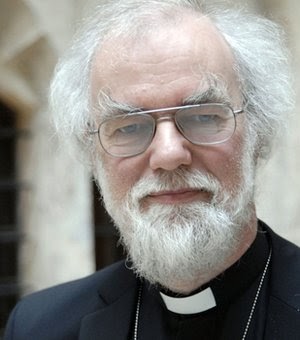
This was and is a contraversial topic in the Christian community, especially when focused on the dichotomy between Catholicism and Anglican reflections on homosexuality within the Church. Dr. Rowan Williams has had a clear vision for the Church of England, one which has brought it into the C21st. Have a read of the linked articles and think of what challenges the Church of England might become faced with in the near future.
Monday, 24 September 2012
Jesus' wife?
There have been many attempts at clarifying whether or not Jesus of Nazareth had a wife. From works of fiction (The DaVinci Code) to coptic translations.
There is always a question of authority when approaching ancient translations. Not so much authority of the scholar who uncovers them, but the text itself. Language is fluid, words and meanings shift over time in order to keep up with constantly globalising cultures.
This particular text is dated to a similar time as one of the Gospel texts. When the Christian canon was compiled, in various attempts to agree on a doctrine, there were inevitably some texts which were left out.
However the legitimacy of this particular text is sincerely debatable. It is imperative that we approach theories like this with an academic hat on, one which enables rather than dismisses. If this text is indeed legitimate and seen as a historic document which teaches us more about the life of the protagonist Jesus then we need to be aware of the implications. If therefore this text is legitimate and was not included in the Christian canon, we must try and understand why it was not integral to the development of the Christian religion.
Monday, 3 September 2012
A guide to the Anglican lick:
Lawrence Edmonds a young man from Yorkshire was challenged by his mate to lick every Anglican cathedral in the UK. That's 64 cathedrals. You can follow his journey on Twitter.
I have to admit that this is a bizarre and unhygienic past time is a fantastic way to get to see the wonderful architectural, artistic and theological sights of the UK.

Lawerence is documenting his travels as he attends the 42 cathedrals in England, the 8 in Scotland, 8 in Northern Ireland and 6 in Wales.
In an age where the positive exposure of Christianity in the media is seldom frequent, it is fantastic to see a revitalised view of some of the nation's oldest and finest buildings. If you are interested in reading Theology at University, or indeed if not, don't be afraid to take up Mr Edmonds' example although not necessarily the licking of, but definitely the visiting and appreciating of the UK's cathedrals. Good luck to him as he strives towards his deadline of the 16th December this year.
Tuesday, 3 July 2012
Can substance be created out of absence? An RS/Physics collaboration:

If you ask a physicist whether or not this is possible, their gut reaction would be to say: "No." However after discussing the inner workings of Up and Down quarks inside a proton at the centre of a nucleus, it is possible to theorise that matter can be created where is was not already in existance.
Energy and Mass are one in the same thing. particles that are made up of quarks, have those quarks bonded by the strong nuclear force. If this bond is extended or separated, the force becomes greater rather than decreasing with distance as the electromagnetic or gravitation force behaves. if you try to separate a quark from other quarks, the force becomes so great that it is energetically advantageous for a particle, antiparticle pair to emerge from the vacuum of space near them, bind with each of the quarks you are separating, therefore reducing the separation force. hence the creation of matter, with a little help from energy. In addition with collisions in particle accelerators, if the energy of collision matches or exceeds the energy of a particle, it can be created.
As a philosopher or a theologian, we now need to discuss the impact that this process ca have on our view of creation. Russell would speculate as to the impact that this would have on our view at all, should we even concern ourselves with these questions? Anthony Kenny would suggest that this fundamental sub-atomic process has no impact on a Christian doctrine of creation. To the extent that the natural processes causing the universe to be sustained are inherent within the act of creating, and as a result it is therefore santioned by God. Find more on this in Kenny's dialogue prompted by Aquinas' writings on cosmology.
Wittgenstein would ask about the nature of cosmology that it can be 'mystical'. Does cosmology not seek to find images, the big bang/multi-universe theory/processes in the nucleus, by which to express events so unlike anything experienced on Earth, therefore rendering literal language of little use? If we therefore render language useless how can we seek to compare theological creation as allegory with the contemporary perception of creation?
Tuesday, 29 May 2012
Richard Dawkins on the newfangled King James Bible distribution plans
The BBC have published Richard Dawkins' perspective on the plans to distribute the King James Bible within schools. Dawkins has the view that as a literary work, the Bible offers a vast amount of linguistic and clutural infomation and that reading from it will devlop your understanding of the English language.
However controversially, Dawkins says that the Bible cannot be understood as a moral guide to behaviour and therefore that any rational reader, of sound mind, should come to the conclusion that it is an integral work of fiction.
"Some phrasiology from the KJB: No peace for the wicked (Isaiah 57:21), The blind leading the blind (Matthew 15:13) and God forbid (Romans 3:6)"
He comments on the skillful allegories and allusions in the King James Bible which akin to that of Shakespeare's Hamlet.
I will leave our perspective open, but the article is a fascinating atheist and linguistic interpretation on the use of this powerful narrative in society.
However controversially, Dawkins says that the Bible cannot be understood as a moral guide to behaviour and therefore that any rational reader, of sound mind, should come to the conclusion that it is an integral work of fiction.
"Some phrasiology from the KJB: No peace for the wicked (Isaiah 57:21), The blind leading the blind (Matthew 15:13) and God forbid (Romans 3:6)"
He comments on the skillful allegories and allusions in the King James Bible which akin to that of Shakespeare's Hamlet.
I will leave our perspective open, but the article is a fascinating atheist and linguistic interpretation on the use of this powerful narrative in society.
Wednesday, 2 May 2012
British Poverty could be Alleviated by a Robin Hood Tax?
On Monday, Cardinal O'Brien took on David Cameron in a statement which declared that Government policy was not doing enough to help alleviate suffering througout impoverished communities in the UK.
Cardinal O'Brien dubbed by The Guardian as "Scotland's most senior Catholic" is pressing to enforce the Tobin tax which seeks to attach a small, realistically percentile, static rate on domestic financial transactions.
This would create a Government fund to be able to directly tackle poverty within the UK. The Cardinal accused the Government of having "immoral economic policy" which exacerbates the situation of those who are financially less well-off. A full transcript of the BBC1 Sunday Politics in Scotland is available online.
What do you think? Is it the case that taking small fractions of large transactions in the City parallels a Robin-Hood-esque charitable mentality, or is it a Robin-Hood-esque aggressive concept which looks for confrontation rather than contribution.
Cardinal O'Brien dubbed by The Guardian as "Scotland's most senior Catholic" is pressing to enforce the Tobin tax which seeks to attach a small, realistically percentile, static rate on domestic financial transactions.
This would create a Government fund to be able to directly tackle poverty within the UK. The Cardinal accused the Government of having "immoral economic policy" which exacerbates the situation of those who are financially less well-off. A full transcript of the BBC1 Sunday Politics in Scotland is available online.
What do you think? Is it the case that taking small fractions of large transactions in the City parallels a Robin-Hood-esque charitable mentality, or is it a Robin-Hood-esque aggressive concept which looks for confrontation rather than contribution.
Monday, 23 April 2012
Beyond Belief: does Physics explain away God?
Ernie Rea broadcasts Beyond Belief, the BBC Radio 4 program, as he seeks to discuss whether modern Physics has explained away God. This is an incredibly relevant debate for the AQA AS Unit 'Psychology of Religion' as it seeks to analyse the impact which science has on religious faith.
For aspiring physicists the broadcast analyses the compatibility of science and religion: Quantum theory of uncertainty; the Big Bang and creation; Galileo's involvement and conflict with the Church; Newtonian principles; the relationship between the laws of nature, theology and the fundamental scientific forces in action around us.
When listening to this, think of how religion and science can work together by learning from each other, whether science seeks to undermine philosophy or whether both disciplines share an innate rationality which makes them inextricably linked.
Try to research the 'God of the gaps' theory and how it relates to the 'multiverse theory'. Is it possible for theology to explain the existence of an omnipotent God, creator of our universe without us being in contact with any other evidences of creation? Or is it more plausible that creation is a devine act and not that of a chemical reaction.
For aspiring physicists the broadcast analyses the compatibility of science and religion: Quantum theory of uncertainty; the Big Bang and creation; Galileo's involvement and conflict with the Church; Newtonian principles; the relationship between the laws of nature, theology and the fundamental scientific forces in action around us.
When listening to this, think of how religion and science can work together by learning from each other, whether science seeks to undermine philosophy or whether both disciplines share an innate rationality which makes them inextricably linked.
Try to research the 'God of the gaps' theory and how it relates to the 'multiverse theory'. Is it possible for theology to explain the existence of an omnipotent God, creator of our universe without us being in contact with any other evidences of creation? Or is it more plausible that creation is a devine act and not that of a chemical reaction.
Wednesday, 28 March 2012
Affluenza: Oliver James article
In one respect James’ opinion that our Capitalist systems need an inevitable reform is correct. One could argue that we would learn a lot from Marx’ writings on economics, and interpret from Adam Smith’s foundation economic theory that the drive for affluence is inevitable in human nature, it is the way we approach economics, that has to change Today. Stephen Green (there are two authors, be wary of finding the relevant one: HSBC Group Holdings plc,Chairman) who wrote a few books on incorporating Christian values into the market place: Good Money is a developed book which seeks to analyse the role that theology has in capitalism, critiquing the place of Christian familial values in economics.
Contrary to James, I would seek to broaden your opinion on economics, read up on the inevitability of recessions, and then the affect that religious belief has on our economic behaviour. I would argue that incidences of economic depression, or ‘Minsky moments’ are as a result of the human condition. A Christian might argue this from original sin; others would say that James’ analysis of ‘Affluenza’ is indeed a more accurate cause.
Tuesday, 20 March 2012
Is there a limit to Mobile technology?
Nokia are looking into patenting a "magnetic tatoo" technology which would create vibrations under the skin to alert the subject to calls and messages. Imagine having your mobile alerts coming straight to your skin, even if your phone wasn't near you... What reprecussions do you think a technology like this would have on communicaiton? Or would it actually change the way we communicate at all?
Monday, 19 March 2012
Euthanasia, Assisted Suicide and the Law:
The recent case of the locked-in syndrome patient in the UK who can only communicate through a series of eye-blinks via a computer system, is now challenging the ethical boundaries of our legal system. Whether euthanasia or assisted-suicide is being discussed it is important to consider the wider implications. How would a decision in this instance might affect broader society? Read a group of UK nurses' thoughts on the case.
Monday, 27 February 2012
Can claims about Morality be objective?
This work appears on the Cambridge Undergraduate Philosophy reading list as an introduction to questions concerning ethics, specifically morality. The last 2 chapters focus on looking beyond happiness to find other base aims and instincts of humanity.
It is a fluid and accessible study of morality and one which is well regarded amongst Undergraduate philosophy and theology courses.
Amazon it here
It is a fluid and accessible study of morality and one which is well regarded amongst Undergraduate philosophy and theology courses.
Amazon it here
Ticking ovarian clock? Or, an end to restriction by time:
Stem cell research is now hoping to adapt ovaries to have an unlimited supply of fertile eggs. A recent study using female mice proved successful. You may read more about the scientific process at:Journal of: Nature Medicine and The BBC explore the impact that this technology could have, if made available to humanity. Try to consider the different perspectives on this topic.
Wednesday, 15 February 2012
Tolerance of Homosexuality in Uganda:
This article posted by the BBC, only hours ago, analyses the work of gay rights activists in Uganda. The current law in Uganda for 'homosexual acts' is up to a 14 year jail sentence. The government proposal is to increase it to life, through Capital punishment.
The dominant religious faith in Uganda is Roman Catholicism. Protestantism and Islam comprise the remaining population.
The questions that you should be asking whilst reading these articles are: Does tolerating homosexuality in a Roman Catholic community affect the individual's salvation? Should a government be allowed to pass laws based solely on religious justification? Is there another more amicable solution for co-existence?
The dominant religious faith in Uganda is Roman Catholicism. Protestantism and Islam comprise the remaining population.
The questions that you should be asking whilst reading these articles are: Does tolerating homosexuality in a Roman Catholic community affect the individual's salvation? Should a government be allowed to pass laws based solely on religious justification? Is there another more amicable solution for co-existence?
Monday, 13 February 2012


The Handmaid's Tale:
From the author Margaret Atwood, a Canadian novelist and influential C20th feminist.
The Handmaid's Tale explores feminism, utilitarianism, fascism, free will, propoganda, chauvinism and political oppresion. This book explores the journey of a female protagonist in a male and class dominated political system. This book appears on many Undergraduate reading lists for Philosophy, Politics, English Literature and Anthropology. Well worth a read for £4.00
The Handmaid's Tale explores feminism, utilitarianism, fascism, free will, propoganda, chauvinism and political oppresion. This book explores the journey of a female protagonist in a male and class dominated political system. This book appears on many Undergraduate reading lists for Philosophy, Politics, English Literature and Anthropology. Well worth a read for £4.00
Wednesday, 8 February 2012
Terrorism, Capital punnishment, Radical Islam and the perception of religion:
This is an article from the Independent newspaper which discusses Abu Qatada and his last 10 years as an detained Islamic cleric. You should be focusing your thoughts towards: questions of ethics regarding his deportation to a capital sentence; the impact that broadcasted religious beliefs can have on society; current anti-terrorism regulations in the UK.
Friday, 3 February 2012
Why do people experience religious visions?
The BBC explore the concept of religious experiences, aetheist and believer's attitudes and whether or not they are caused by seisures. Do you think that pre-conceived archetypes or religious imagery are the source of content in these visions?
Plato's Cave
This is Simon Blackburn, a Cambridge professor in Philosophy, discussing Plato's Cave. Blackburn has an uncanny ability to scythe through philosophical jargon, therefore offering an easy-to-understand explanation. He can be a bit dry to listen to at first...give it time.
Thursday, 2 February 2012
Economics and Religious Language
Alain de Botton: 'We should rebrand tax as charity'. Can we use religious language to alter our perceptions monetary transactions? Or is using a New Testament concept of charity as the giving of agape, rather than monetary value, more appropriate?
Subscribe to:
Posts (Atom)